Assessing the Effects of Cross-Border Data Regulations on Real-Time Game Streaming Services for International Players
Quinn Walter · Aug 20, 2026
Assessing the Effects of Cross-Border Data Regulations on Real-Time Game Streaming Services for International Players
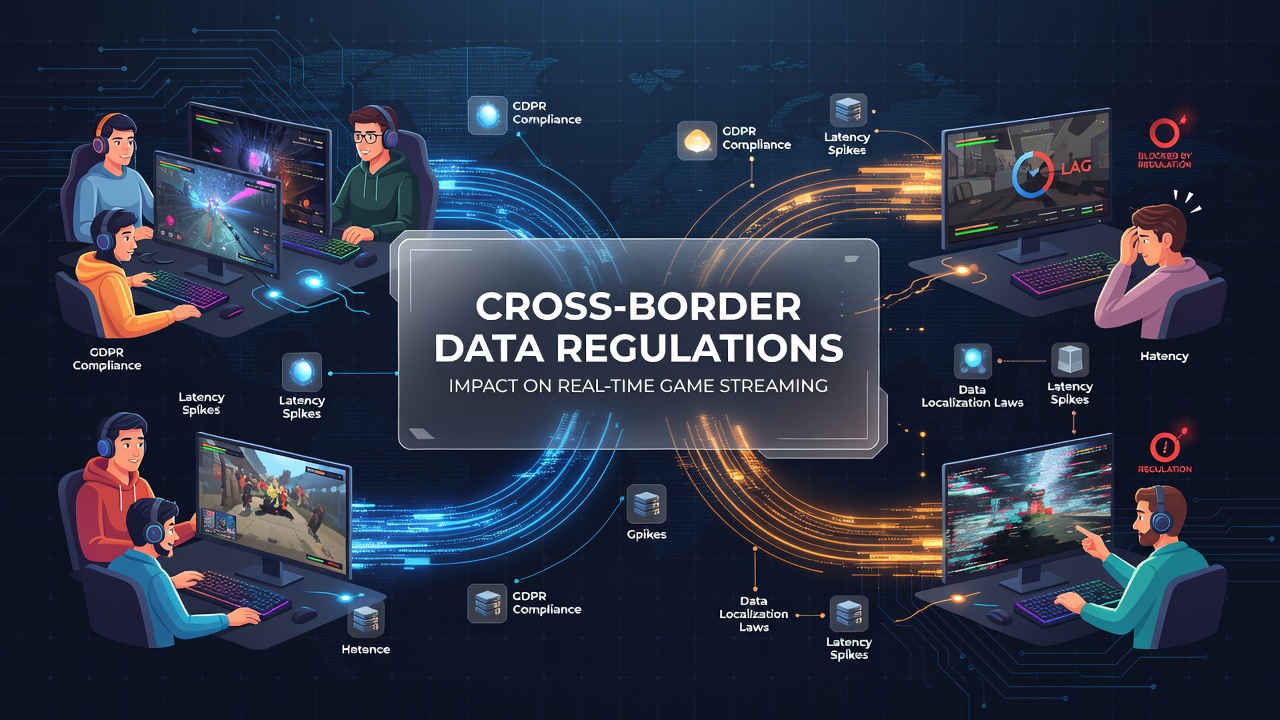
Cross-border data regulations shape how real-time game streaming services handle player information across jurisdictions, and operators must navigate rules that govern data transfers, localization requirements, and consent mechanisms. These frameworks include the European Union's General Data Protection Regulation, Canada's Personal Information Protection and Electronic Documents Act, and Australia's Privacy Act, each imposing distinct obligations on platforms that deliver live streams to international audiences. Data localization mandates in several Asian markets further restrict where servers can store gameplay footage and user metadata, which directly affects latency and service reliability for players connecting from distant regions.
Regulatory Frameworks and Data Flow Constraints
European rules require explicit consent for processing personal data during live streams, while similar provisions in other regions demand that companies document every transfer of player identifiers and behavioral logs. Observers note that service providers often implement encryption protocols and anonymization techniques to comply with these standards, yet the added computational layers introduce measurable delays in stream synchronization. In August 2026 regulators in multiple jurisdictions issued updated guidance on cross-border transfers that clarified requirements for adequacy decisions and standard contractual clauses, prompting several streaming platforms to reconfigure their server architectures.
Those who manage real-time services report that compliance audits now examine every point where data crosses borders, from initial player login through session termination. Research from academic institutions in North America and Europe indicates that platforms serving users across the EU and Southeast Asia face the steepest compliance burdens because they must reconcile divergent consent models and retention periods. Service interruptions occur when a jurisdiction updates its rules without sufficient transition time, forcing operators to pause streams until new safeguards receive approval.
Technical Adjustments in Streaming Infrastructure
Real-time game streaming relies on low-latency connections that transmit video, audio, and interactive elements simultaneously, and data regulations influence the geographic placement of content delivery networks. Companies often establish regional nodes that keep certain categories of data within approved borders while routing less sensitive traffic through global hubs. This segmented approach maintains performance for international players yet requires continuous monitoring to ensure no unauthorized transfers occur during peak usage periods.

Engineers have developed dynamic routing systems that detect a player's location and apply the corresponding data-handling rules in real time. These systems incorporate machine learning models trained on regulatory texts from various countries, allowing automatic adjustment of encryption strength and data retention schedules. Figures from industry reports reveal that platforms adopting such technology reduced compliance-related downtime by measurable margins during the first half of 2026.
Player Experience Across Regions
International players encounter varying levels of access and functionality depending on teh regulatory environment in their home country and the location of the streaming service provider. Some regions require age verification data to remain stored locally, which can extend onboarding times for users connecting from abroad. Others mandate that chat logs and gameplay statistics receive separate handling from video feeds, adding complexity to the synchronization process.
Studies conducted by research groups in Australia and Singapore show that players in jurisdictions with strict localization rules experience slightly higher average latency compared with users in less restrictive markets. The difference arises because additional verification steps and regional server hops become necessary to satisfy data residency conditions. Service providers respond by offering regional mirrors that replicate core streaming functions while keeping sensitive records within approved territories.
Industry Responses and Compliance Strategies
Trade associations representing online gaming and streaming sectors have published guidelines that help members align operations with multiple regulatory regimes simultaneously. These documents emphasize the importance of mapping data flows before launching services in new markets and maintaining detailed records of every cross-border transfer. Companies that follow these recommendations report smoother interactions with supervisory authorities and fewer instances of service suspension.
One case involved a platform that partnered with a university research team to model the impact of proposed data rules on stream quality, allowing preemptive adjustments before the rules took effect. Such collaborations provide operators with quantitative forecasts of how consent requirements and localization mandates will affect player retention and engagement metrics.
Conclusion
Cross-border data regulations continue to evolve, requiring real-time game streaming services to maintain flexible infrastructure that adapts to shifting legal landscapes while preserving performance for international players. Platforms that invest in compliant routing technologies and maintain transparent data practices position themselves to meet regulatory expectations across regions. Ongoing dialogue between industry participants, academic researchers, and government bodies supports the development of standards that balance privacy protections with the technical demands of live streaming.