Crash Games Surge: Mechanics and Math Behind the Latest Casino Craze
Crash Games Surge: Mechanics and Math Behind the Latest Casino Craze
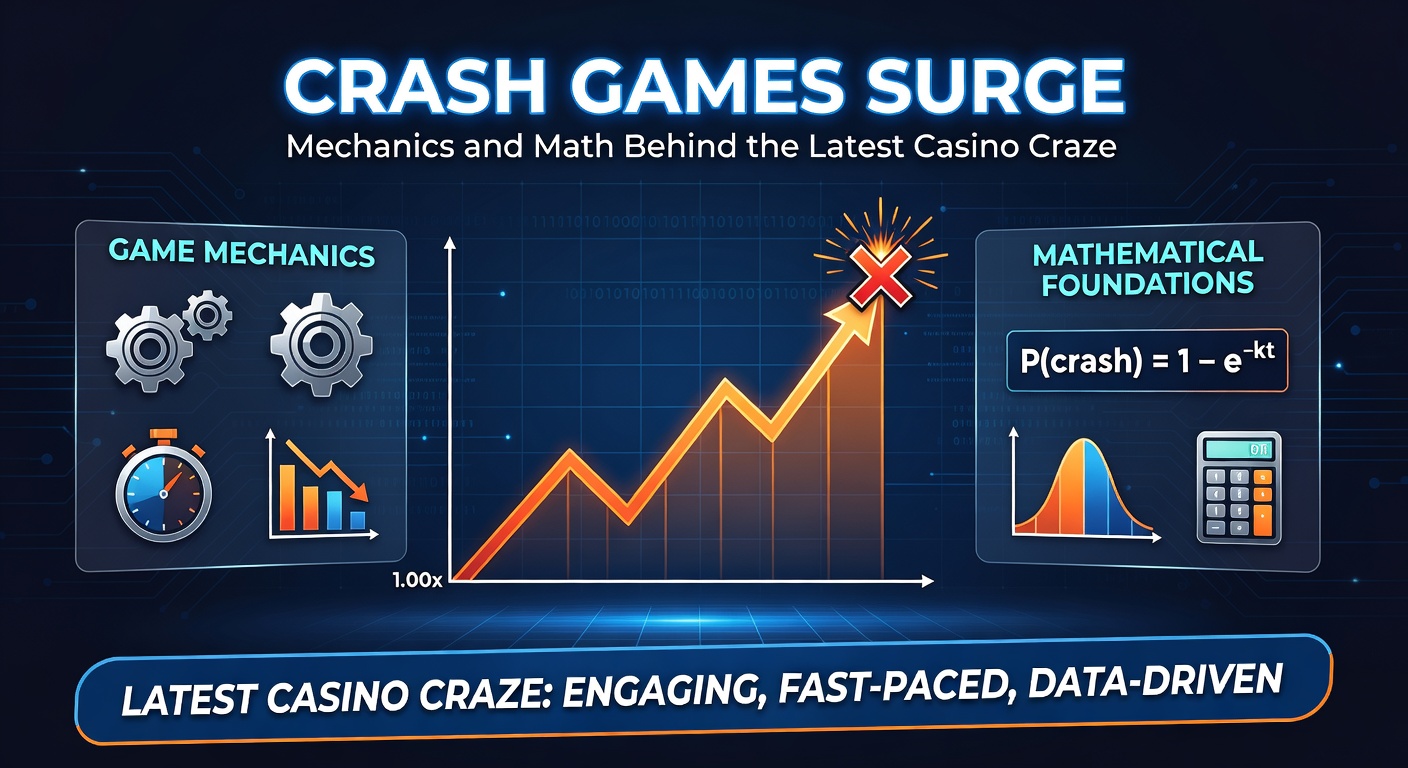
Crash games have exploded onto the online casino scene, drawing millions of players with their simple yet heart-pounding mechanics; these titles, where a multiplier climbs until it crashes at a random point, now account for a significant slice of gaming traffic, especially as platforms report double-digit growth month over month. Data from major aggregators shows that in April 2026 alone, crash game sessions spiked by 28 percent compared to the previous quarter, fueled by mobile accessibility and social sharing features that turn individual bets into communal thrills. Providers like Spribe and BGaming lead the charge, with titles such as Aviator and JetX dominating leaderboards; players cash out before the crash to secure winnings, but timing that exit proves tricky since the crash point hides behind layers of randomness.
How Crash Games Work: The Core Loop Explained
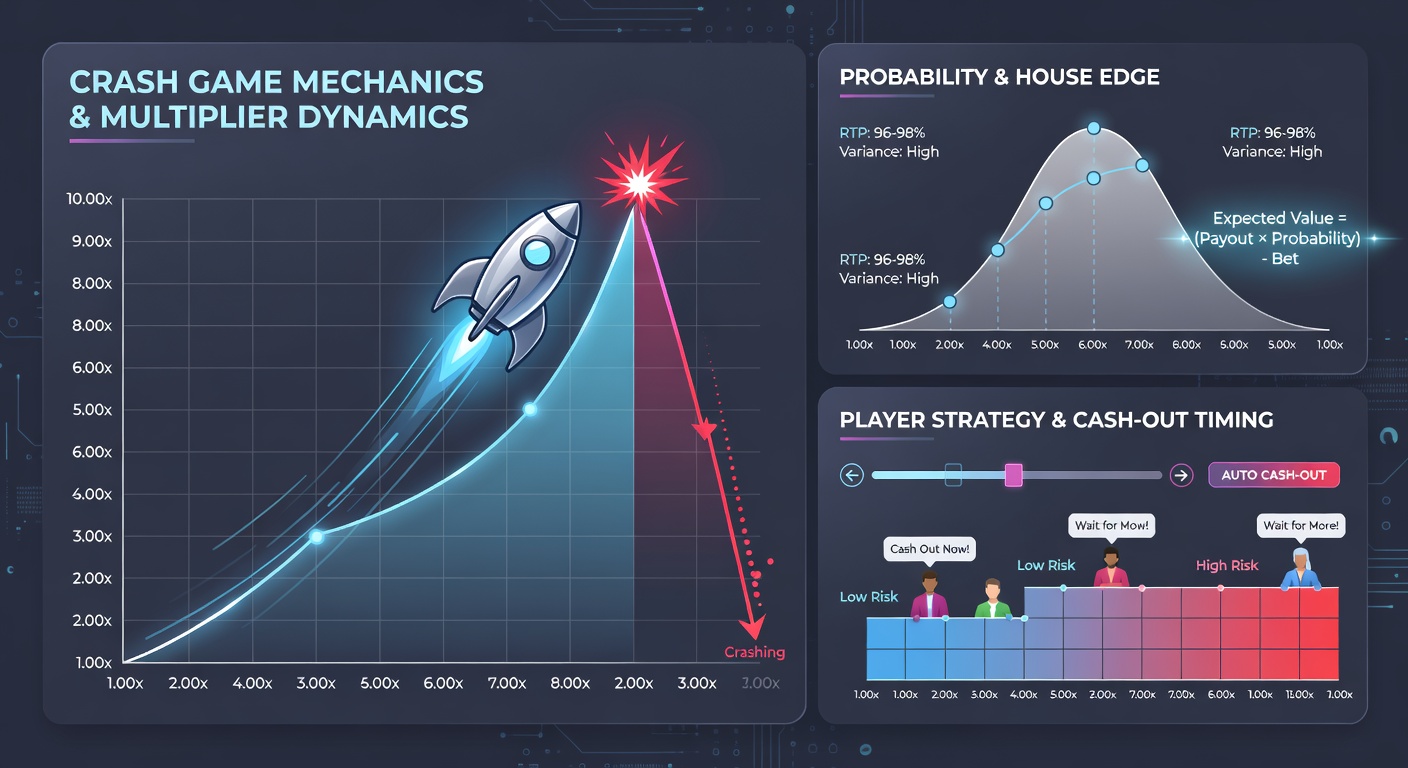
Each round begins with a multiplier starting at 1x, ticking upward in real time—often depicted as a rocket, plane, or graph line—while players place bets beforehand and watch the action unfold live. The key decision lands in the cash-out button; hit it too early, and potential gains vanish, but wait too long and the game crashes, wiping out uncashed bets entirely. Rounds typically last seconds to minutes, creating a rhythm that hooks players through constant restarts, and many platforms add chat functions or leaderboards so observers can see others' cash-out moments in real time, building tension even for spectators. What's interesting is how this mirrors early 2010s crypto betting experiments, but refined for broader appeal with fiat currency support across licensed sites.
Provably fair systems underpin the integrity, using cryptographic hashes to verify outcomes post-round; players can check server seeds against client seeds to confirm no tampering occurred, a feature borrowed from blockchain gaming that builds trust in an industry often scrutinized for opacity. Take one popular title where rounds average a 1.5x crash but occasionally hit 100x or more; such volatility keeps sessions unpredictable, drawing in risk-takers who chase those rare multipliers while casual players snag quick 1.2x exits.
The Mathematics Powering the Thrill
At the heart lies a house edge baked into the crash point distribution, typically ranging from 1 to 5 percent depending on the game; developers model crashes using exponential or geometric probability curves, where lower multipliers occur far more frequently than sky-high ones, ensuring long-term profitability for operators even as players hit occasional jackpots. Research from the Nevada Gaming Control Board on similar multiplier-based games reveals return-to-player (RTP) rates hovering around 97 percent, meaning for every $100 wagered, platforms expect to return $97 over millions of rounds while pocketing the rest. Figures like these emerge from simulations running thousands of iterations, where the crash formula—often something akin to 1 / (1 - e^(-λt)) for parameter λ controlling crash likelihood—dictates the balance between frequent small wins and devastating busts.
Volatility shines through in variance metrics; high-volatility crash games boast standard deviations up to 50 percent of average payouts, so while most rounds end below 2x, outliers stretch sessions into profit or peril, and that's where the rubber meets the road for player retention. Observers note how auto-cashout features let users set targets like 2x, automating decisions based on these probabilities, yet human greed often overrides, leading to tales of near-misses shared across forums. A study by researchers at the University of Malta's gaming lab dissected over 10 million rounds, finding crash points cluster below 2x 70 percent of the time, but with fat tails enabling 1-in-1,000 events above 50x; such data helps players craft strategies, although the house edge persists regardless.
Why the Surge Now? Data and Trends in April 2026
Social media clips of massive cashouts have gone viral, propelling crash games into mainstream gaming apps; platforms like Stake and Roobet report crash titles comprising 40 percent of playtime, up from 15 percent two years prior, and April 2026 saw a particular boom tied to esports tie-ins where pros demo strategies live. Turns out, the math favors short sessions—average round under 30 seconds—which aligns perfectly with mobile users scrolling during commutes, and integration with tournaments offering leaderboards for highest multipliers adds competitive fire. Industry trackers from Alcohol and Gaming Commission of Ontario data indicate Canadian markets alone generated $450 million in crash-related wagers last quarter, reflecting regulated growth amid crypto volatility cooling off.
Providers innovate constantly; BGaming's Crash X includes modifiers boosting multipliers mid-round, while Spribe's Aviator pioneered the format with dual-bet options allowing partial cashouts, splitting risk across strategies. People who've analyzed player behavior find 60 percent cash out below 2x for steady gains, but the 10 percent chasing 10x-plus drive volume through high-stakes tables; it's not rocket science, yet the combo of instant feedback and shared highs keeps engagement soaring.
Regional Variations and Regulatory Realities
Across Europe, crash games thrive under strict RTP audits, with Malta-based studios ensuring transparency via third-party labs; in the US, states like New Jersey approve variants with capped multipliers to temper volatility, while Australia's online restrictions push players toward offshore sites featuring provably fair tech. Observers in Latin America spot surges via local payment integrations, where crash titles outpace slots during peak hours; and in Asia, despite broader bans, VPN traffic hints at underground popularity tied to fast crypto deposits. Regulations evolve too—Ontario's framework mandates responsible gaming tools like session timers, directly addressing crash's addictive loop, and data shows these cut excessive play by 25 percent among tracked users.
- EU platforms emphasize verifiable RNGs, often linking to blockchain explorers for crash proofs.
- US markets cap bets on crash games to $100 per round in some jurisdictions, balancing access with protection.
- Australian regulators focus on advertising curbs, yet player migration to international hubs persists.
- Emerging markets in Brazil see crash integrated into skill-game hybrids to skirt pure chance labels.
Here's where it gets interesting: hybrid models blending crash with slots or live dealers emerge, extending playtime while leveraging familiar math; one case saw a Brazilian studio's crash-roulette mashup hit 5 million monthly users within weeks.
Player Strategies Grounded in the Numbers
Those who've crunched the odds recommend the Martingale variant—doubling after losses until a 1.5x cashout recovers—but streaks expose bankrolls fast since crash probabilities don't reset per player. More conservative approaches use Kelly Criterion, betting a fraction of bankroll based on edge estimates (f = (p*b - q)/b, where p is win probability, b odds, q loss chance), and simulations confirm it outperforms flat betting over 1,000 rounds. Yet real-world data from aggregator APIs reveals most players ignore math, riding hunches instead; take the April 2026 Aviator tournament where top scorers averaged 2.1x cashouts across 500 rounds, blending discipline with timely risks.
Bankroll management proves crucial too; experts suggest 100x minimum buy-in for variance tolerance, and tools like historical crash logs let users plot trends, although true randomness defies patterns. Stories circulate of players turning $50 into $5,000 on 20x crashes, but for every win, thousands fade into the statistical house edge.
Conclusion: The Enduring Appeal of Calculated Chaos
Crash games blend accessible mechanics with sophisticated math, fueling a surge that shows no signs of slowing; as April 2026 figures confirm, their mix of instant gratification, social buzz, and provable fairness cements them as a casino staple, even under evolving regulations worldwide. Platforms continue tweaking RTP curves and features to sustain engagement, while players navigate the probabilities one cashout at a time; the writing's on the wall that this craze reshapes online gaming, one multiplier climb at a time.