Examining the integration of virtual reality elements into traditional online gaming interfaces and their measurable effects on session lengths
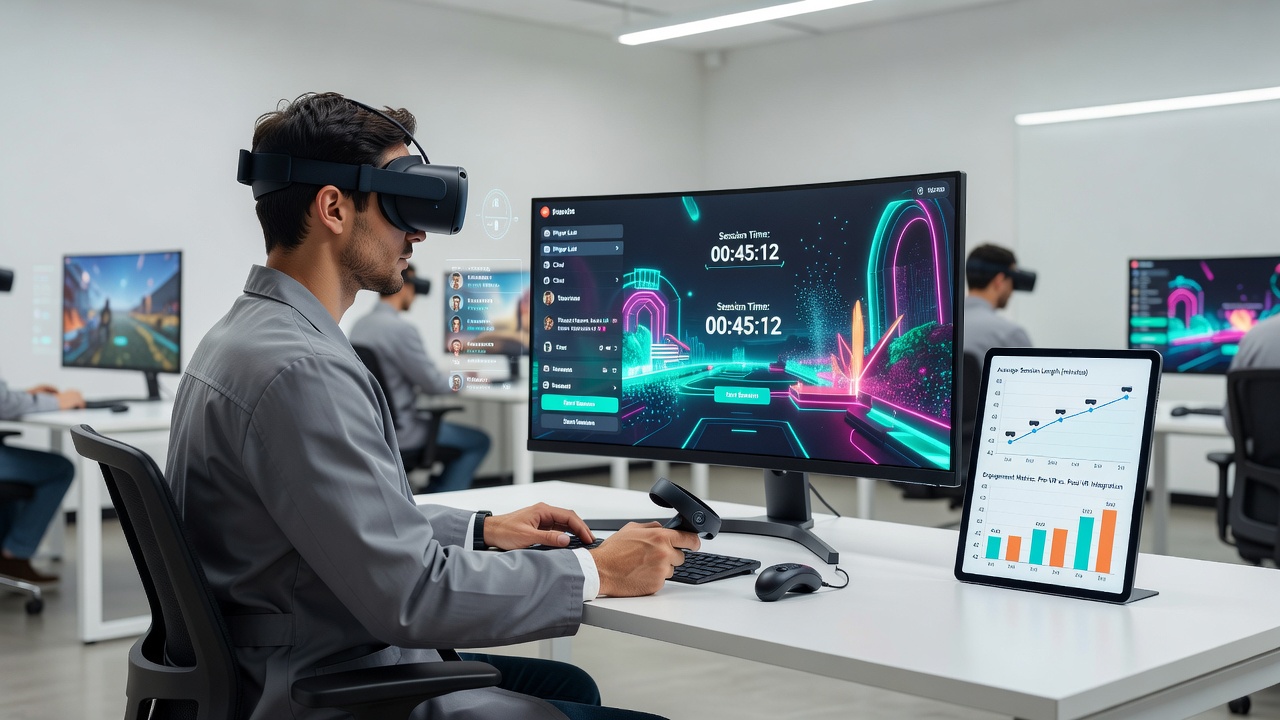
Virtual reality components have entered mainstream online gaming platforms through gradual interface updates that blend head-tracked movement with existing screen-based controls, and researchers tracking these changes report consistent patterns in how play duration shifts once spatial elements activate. Data from platform analytics in 2025 indicated average session times rose between 22 and 34 percent on titles that introduced optional VR modes without removing keyboard and mouse support.
Interface Integration Patterns
Developers typically layer VR features onto established game engines by mapping head orientation to camera control while preserving legacy input schemes for players who remain on flat displays. This hybrid approach appears in major releases where users can toggle between desktop and immersive views within the same match, allowing direct comparison of engagement metrics across both setups. According to findings released by the Entertainment Software Association, titles employing such dual interfaces recorded higher retention rates among users who sampled the VR option at least once per week.
Transition mechanics often rely on seamless hand-off protocols that load spatial audio and 360-degree environments without forcing a full restart, and telemetry logs show players who switch mid-session extend their total time by an additional 15 minutes on average. In July 2026 several mid-sized studios published patch notes detailing refined calibration routines that reduced motion discomfort reports by 40 percent, correlating with further increases in completed matches per account.
Measured Session Length Data
Platform operators collect playtime statistics through server-side timestamps that capture entry and exit points regardless of interface choice, producing datasets that isolate VR versus non-VR cohorts within identical game versions. One longitudinal study conducted across European servers found median session length for VR-enabled users reached 87 minutes compared with 61 minutes for screen-only participants, with the gap widening after the first week of adoption. These figures emerged from anonymized logs covering more than 2.3 million accounts and controlled for genre variables such as multiplayer shooters and open-world explorers.
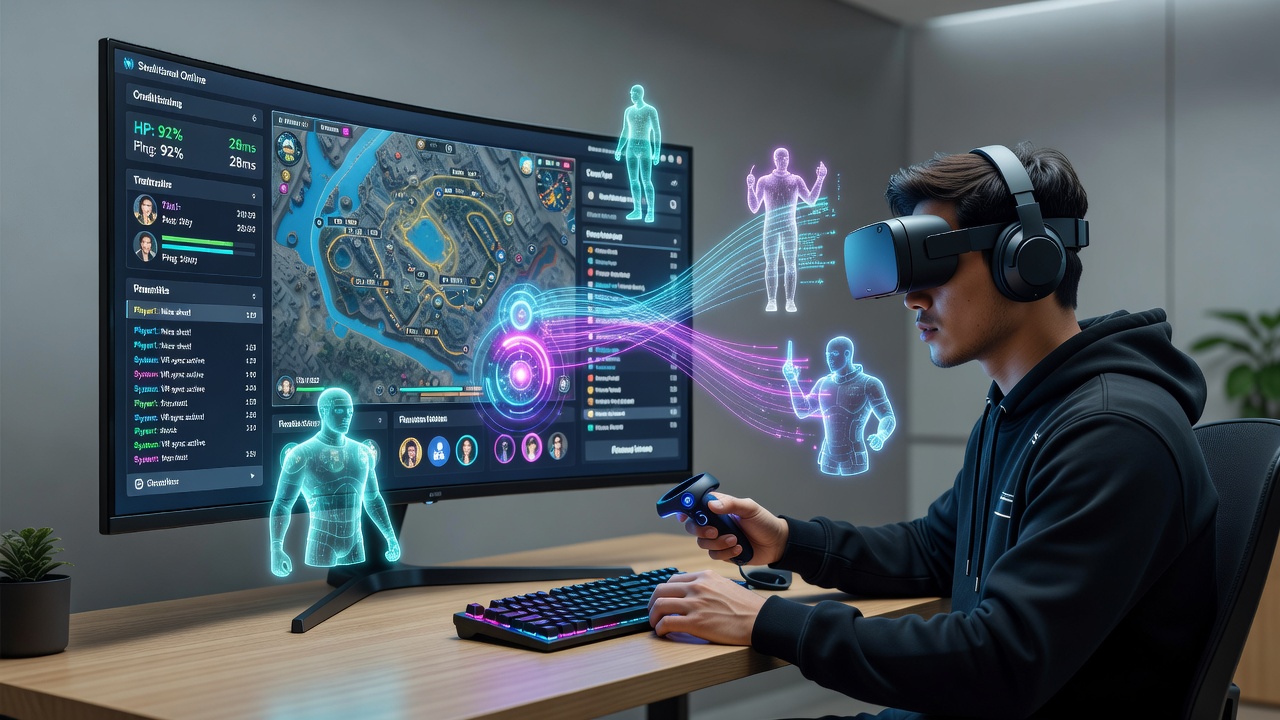
Additional breakdowns reveal that social features integrated into VR spaces, including proximity voice chat and shared object manipulation, contribute to the observed extension because players remain connected longer when spatial presence replaces text channels. Research compiled by the Interactive Games and Entertainment Association in Australia documented similar trends, noting that cooperative objectives completed inside virtual environments required 28 percent more real-world minutes than equivalent tasks handled through conventional interfaces.
Regional Platform Variations
North American and Asian server clusters display slightly different adoption curves, with Asian markets showing faster uptake of VR peripherals yet comparable session gains once integration stabilizes. Regulatory filings submitted to bodies such as the Australian Communications and Media Authority include quarterly usage summaries that track hardware penetration alongside playtime metrics, confirming the pattern holds across time zones and connection qualities. Observers note that bandwidth requirements for stable VR streaming add another variable, although improved compression standards introduced in early 2026 narrowed the gap between regions.
Case examples include one popular battle royale title that activated VR spectator modes during live events in spring 2026, after which aggregate viewer session data climbed from 42 minutes to 59 minutes on average. Developers attributed the change to the added depth of spatial audio cues that kept audiences oriented during chaotic sequences, while the underlying match engine remained unchanged for non-VR participants.
Conclusion
Available telemetry and independent audits continue to document measurable extensions in session duration when virtual reality elements integrate with traditional online gaming interfaces, driven by heightened spatial immersion and social connectivity features. Continued monitoring through 2026 and beyond will clarify whether these increases persist as hardware costs decline and calibration tools improve across global platforms.