Mapping Regional Differences in Live Casino Stream Quality and Their Effects on User Interaction Patterns
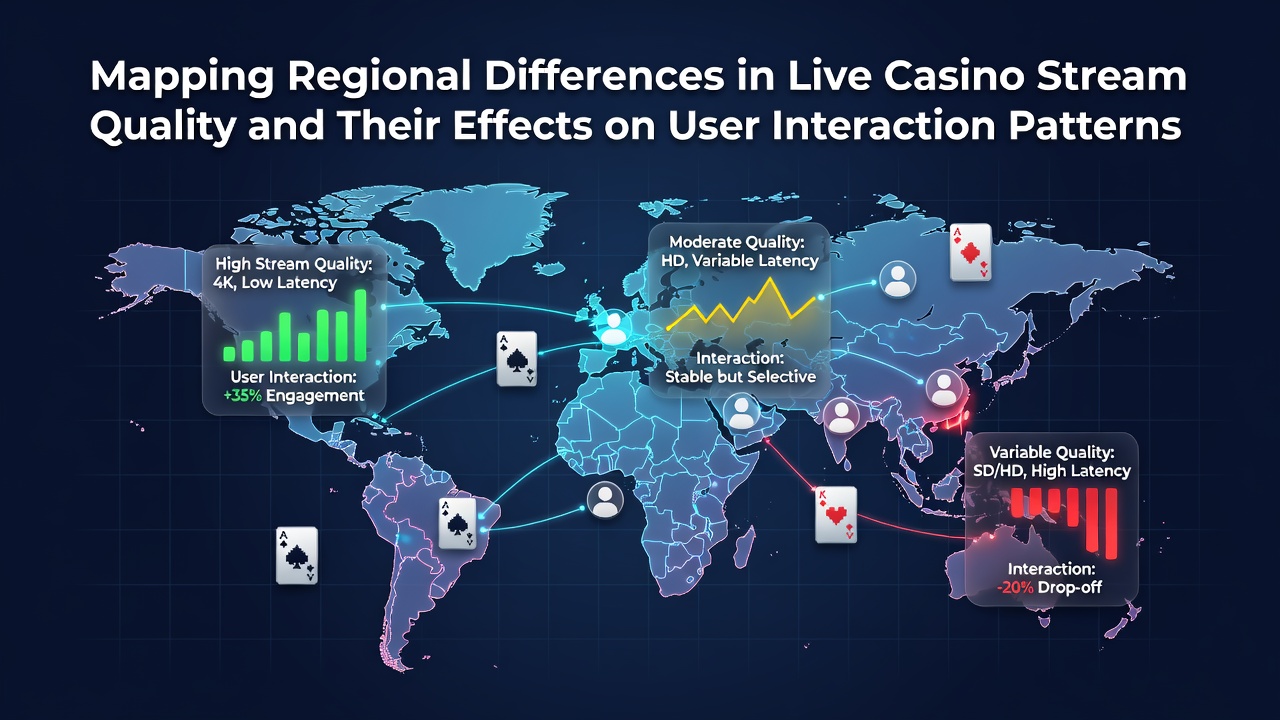
Live casino streams operate through a combination of studio setups, internet infrastructure, and regulatory frameworks that produce measurable differences in video resolution, latency, and frame rates from one region to another, and these technical variations correlate with shifts in player chat frequency, bet timing, and session duration according to multiple industry datasets released through July 2026.
Infrastructure and Regulatory Factors Behind Stream Quality
European markets benefit from widespread fiber networks and consistent 5G rollout that support 1080p streams at under 150 milliseconds of latency in major hubs such as Malta and the Netherlands, while certain Asian jurisdictions experience higher average latency because of stricter content routing rules and variable last-mile connectivity, according to figures compiled by the European Gaming and Betting Association. North American platforms often maintain 720p as a baseline in many states because of patchwork state-level bandwidth requirements, yet operators in Nevada and New Jersey have upgraded select tables to 4K feeds where local data centers permit it. Observers note that these infrastructure gaps create distinct quality tiers rather than uniform global standards.
Regional Quality Profiles as of Mid-2026
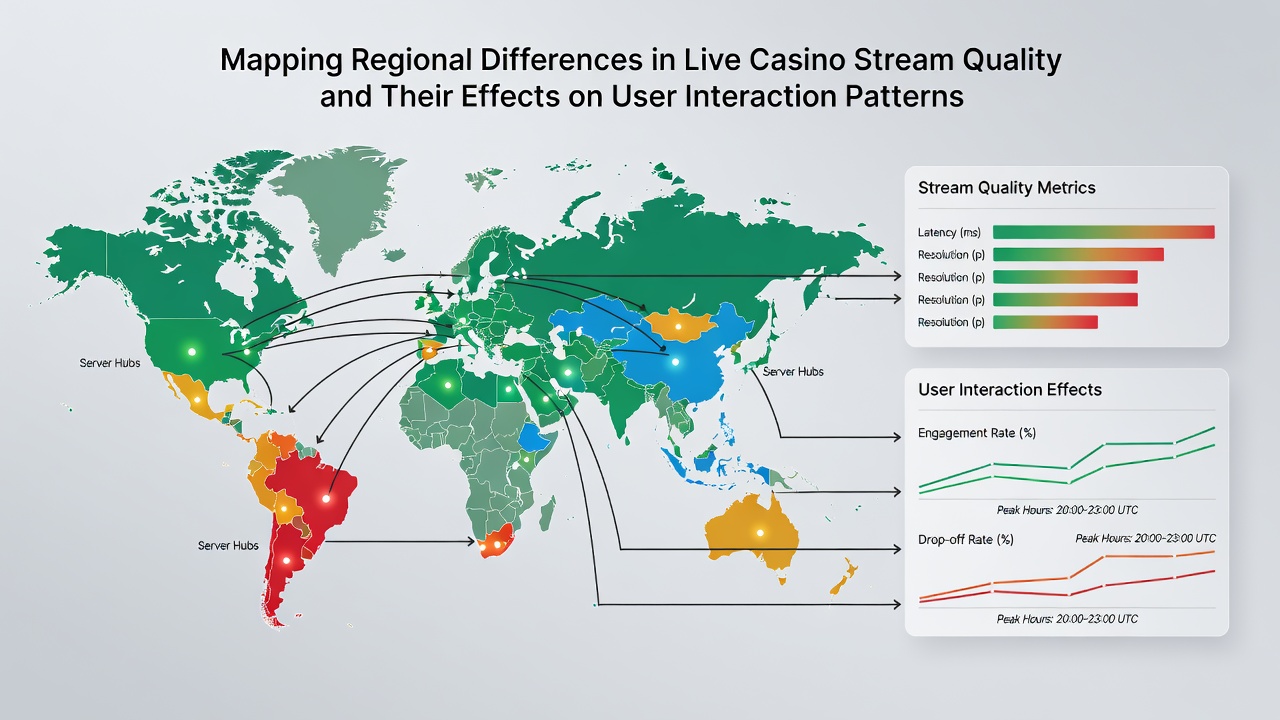
Data collected through the first half of 2026 shows European streams averaging 60 frames per second with packet-loss rates below 0.5 percent during peak evening hours, whereas Southeast Asian feeds frequently drop to 30 frames per second when concurrent viewer counts exceed studio capacity. Australian operators report stable 1080p delivery across most metro areas following the completion of additional submarine cable routes in 2025, yet regional users outside capital cities still encounter occasional buffering that interrupts dealer interactions. North American streams sit between these poles, with Canadian provinces achieving lower latency than many U.S. states because of centralized provincial licensing that encourages shared technical standards. Researchers tracking these metrics have documented clear geographic clusters rather than random fluctuations.
Measured Effects on User Interaction Patterns
Lower latency environments correlate with higher rates of real-time chat messages per minute and more frequent side-bet placements within the same hand cycle, according to aggregated platform analytics released in July 2026. Players connected through high-stability European feeds tend to maintain longer continuous sessions, often exceeding 45 minutes, while users on higher-latency connections show increased session abandonment after 20 to 25 minutes when visual desync becomes noticeable. Interaction heat maps reveal that chat engagement spikes immediately after dealer announcements in low-latency regions, whereas delayed feeds produce staggered responses that reduce collective table energy. These patterns hold across multiple operators and do not appear tied to any single game type.
Cross-Regional Comparisons and Player Behavior Data
Studies conducted by academic groups at the University of Nevada, Las Vegas, compared anonymized interaction logs from platforms serving European, Asian, and North American audiences and found that a 100-millisecond latency increase corresponds to an approximate 12 percent drop in average bets placed per hour. The same research noted that frame-rate consistency matters more than peak resolution, because players tolerate occasional 1080p drops better than sustained stuttering at 720p. Australian regulatory reports from the same period echo these findings, showing that users in fiber-connected zones place larger average wagers during live blackjack rounds than users on variable wireless connections. Such differences persist even when game rules and dealer scripts remain identical across regions.
Technical Adjustments Operators Have Implemented
Many studios now deploy adaptive bitrate streaming that automatically scales resolution based on detected regional bandwidth, yet this solution still leaves measurable gaps because automatic scaling cannot fully compensate for underlying routing delays. Some operators have opened additional regional server nodes in 2026 to shorten the distance between viewers and encoding points, and early telemetry indicates modest improvements in chat participation rates after these deployments. Regulatory bodies in multiple jurisdictions have begun requesting latency disclosure as part of licensing renewals, which has prompted operators to publish quarterly quality metrics rather than internal benchmarks alone.
Conclusion
Regional differences in live casino stream quality continue to influence how users engage with dealers and fellow players, with latency and frame stability emerging as stronger predictors of interaction volume than resolution alone. Data gathered through July 2026 demonstrates consistent geographic patterns rather than isolated incidents, and operators continue to adjust infrastructure in response to these documented behaviors. Future measurements will clarify whether ongoing network investments narrow the current quality spread across markets.