Tracing Connections Between Affiliate Tracking Systems and Visibility Patterns for Remote Wagering Platforms in Emerging Regions

Remote wagering platforms operating in emerging regions rely on affiliate tracking systems to map user acquisition paths while visibility patterns determine how those platforms appear in search results, social feeds, and local advertising networks. These two elements connect through data flows that record clicks, conversions, and session durations, allowing operators to adjust campaigns based on performance signals collected from markets across Southeast Asia, sub-Saharan Africa, and parts of Latin America.
Affiliate Tracking Mechanisms in Practice
Tracking systems employ cookies, device fingerprinting, and server-to-server postbacks to attribute player activity back to individual affiliates, and these methods operate under varying data protection rules depending on the jurisdiction. In regions where internet infrastructure remains uneven, many platforms combine first-party data with anonymized identifiers to maintain accuracy when third-party cookies face restrictions. Observers note that such hybrid approaches help sustain measurement continuity even as regulatory environments shift.
Platforms collect metrics including click-through rates, registration events, and deposit volumes, then feed those numbers into dashboards that highlight which traffic sources deliver sustained engagement. Data from June 2026 shows increased adoption of these integrated systems among operators targeting mobile-first users in markets where smartphone penetration continues to rise rapidly.
Visibility Patterns Across Digital Channels
Visibility patterns emerge from combinations of search engine optimization, paid search placements, influencer partnerships, and localized content distribution that match the browsing habits of target audiences. In emerging regions, operators often prioritize mobile search optimization and short-form video placements because user attention concentrates on those formats. Analysts tracking these patterns observe that regional search engines and social platforms sometimes favor content in local languages, which influences how affiliates structure promotional material.
Those patterns also reflect seasonal events, regulatory announcements, and economic indicators that affect advertising spend. When visibility increases on certain keywords, tracking systems record corresponding lifts in referred traffic, creating feedback loops that guide future budget allocation. Researchers have documented these loops in reports covering multiple jurisdictions where remote wagering remains in early regulatory stages.
Interconnections Between Tracking Data and Visibility Signals
The connection appears when visibility gains on specific channels produce measurable changes in affiliate performance metrics, and operators use that information to refine both creative assets and landing page elements. For instance, an uptick in organic visibility within a particular country often correlates with higher conversion rates from affiliates operating in the same geographic segment. Tracking platforms surface these correlations through cohort analysis that segments users by acquisition source and engagement timeline.
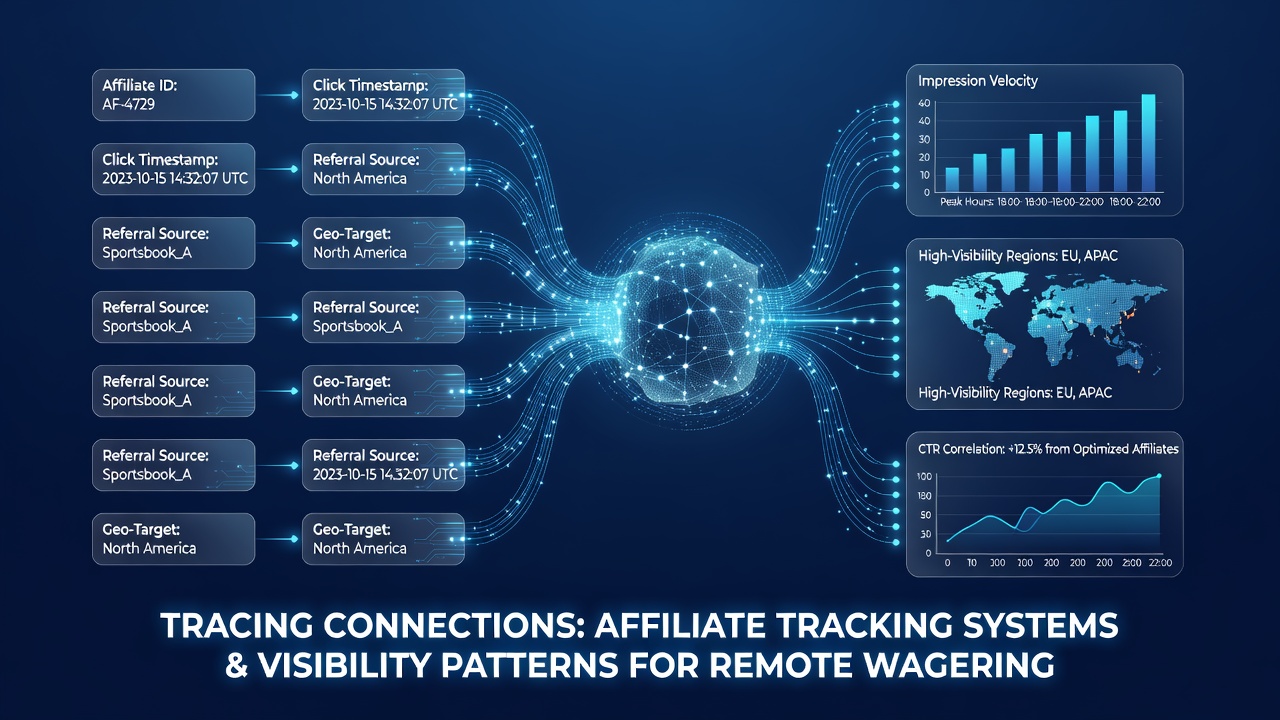
Platforms further strengthen these connections by layering geographic data onto tracking outputs, which reveals how visibility in one city or province influences activity routed through local affiliates. This layered view supports adjustments to bidding strategies in real time, particularly when emerging markets experience sudden shifts in connectivity or device preferences.
Regional Examples and Data Flows
Take markets in Southeast Asia where affiliate networks frequently partner with local content creators who understand dialect-specific search behavior. Tracking systems capture the resulting traffic and tie it back to visibility changes on regional portals, allowing operators to identify which content formats sustain longer sessions. Similar patterns appear in parts of Africa where mobile money integrations affect deposit tracking, and visibility on local news sites or messaging apps drives initial discovery.
One study released in mid-2026 by researchers at the University of Nevada's International Gaming Institute examined these flows across several jurisdictions and found that platforms combining granular tracking with adaptive visibility tactics recorded steadier referral volumes compared with those using static approaches. The findings align with observations from industry associations monitoring digital gambling expansion in developing economies.
Regulatory and Technical Considerations
Emerging regions present distinct regulatory frameworks that affect both tracking capabilities and advertising visibility. Some jurisdictions require explicit consent mechanisms before data collection begins, which influences how affiliates structure their promotional links. Others impose advertising restrictions that push visibility efforts toward organic channels where tracking relies more heavily on post-click attribution.
Technical teams address these constraints by implementing server-side tracking solutions that reduce dependence on browser-level identifiers while maintaining compliance with local rules. Data collected through these methods continues to inform visibility planning, though the granularity varies by market maturity and enforcement priorities.
Conclusion
Connections between affiliate tracking systems and visibility patterns continue to shape how remote wagering platforms expand within emerging regions. The data loops created by these systems allow operators to respond to performance signals across channels, while visibility adjustments feed back into tracking outputs that guide subsequent decisions. As infrastructure and regulatory landscapes evolve, the interplay between these elements remains central to platform strategies in markets where digital access grows steadily.